Dream Pairs, the Amazon footwear brand, is effecting change and inspiring hope in The Bronx through its groundbreaking
"Dream Pairs Loves The Bronx" campaign. This heartening initiative transcends mere commerce, delving deep into the social fabric of the borough, addressing the pressing issues of poverty and inequality. With its inaugural brick-and-mortar store nestled in the Bronx, Dream Pairs is effecting tangible change within the community it serves.

The grand opening of the Dream Pairs store wasn't merely a retail event; it was a rallying cry for residents in search of quality, affordable footwear and a symbol of empowerment for an underserved community. Located within the vibrant Bay Plaza Shopping Center, the store swiftly became a stronghold of inclusivity, offering a diverse array of stylish, high-quality shoes for all ages and occasions. Dream Pairs, alongside its sub-brands Bruno Marc, NORTIV 8, and Dream Pairs Kids, ensures a comprehensive selection of footwear catering to diverse needs.

In collaboration with local schools such as The Equality Charter School and PS 160 Walt Disney Schools, Dream Pairs is championing initiatives to address footwear needs among students and teachers. Through the distribution of over 1,000 vouchers, Dream Pairs is empowering recipients to select shoes that not only fulfill practical needs but also reflect individual style preferences. This initiative underscores the brand's commitment to supporting education and bolstering the confidence of students and educators.

Moreover, Dream Pairs has partnered with the Coalition for The Homeless to provide winter boots and sneakers to over 400 individuals in the Bronx area, offering warmth and dignity to those experiencing homelessness. This compassionate endeavor epitomizes the brand's dedication to supporting vulnerable communities and combating systemic issues of poverty and homelessness.

With the Bronx's poverty rate at 30.0%, the need for community support is dire. Through "Dream Pairs Loves The Bronx," Dream Pairs is addressing these challenges, advocating for change, and offering hope in underserved communities. This campaign transcends footwear, embodying the values of inclusivity, empathy, and social responsibility.
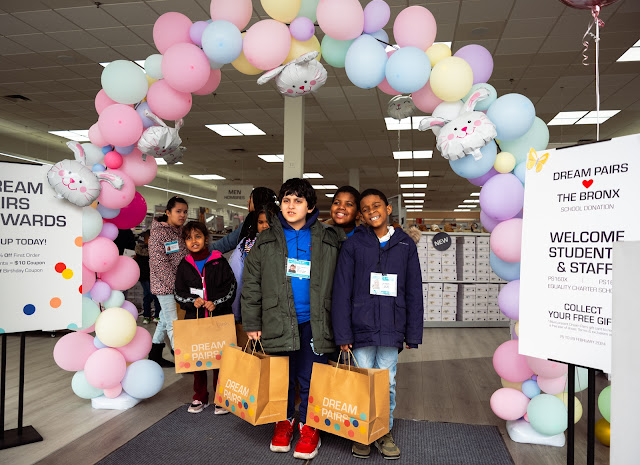
For more information on Dream Pairs and this wonderful outreach, visit
www.dreampairshoes.com. You can also visit their retail store at Bay Plaza Shopping Center in the Bronx.
American companies of all shapes and sizes base their operations in different countries around the world. Whether it's a small company selling embroidered patches that are effective in marketing a business's corporate identity or a large corporation that has retail locations in every state, reshoring allows companies to find diverse talent while cutting costs. The footwear industry is no exception to this trend, with manufacturers for major brands spread across various continents.
Although it is a relatively small country, the Dominican Republic is attracting many American footwear companies looking to reshore. In fact, the DR is a top 10 footwear exporter to the United States. In 2018, the U.S. was the DR's most important export trading partner of footwear and had an export value of about $253 million.
This popularity is made possible by the Dominican Republic Free Zones, a globally-recognized network of 74 free trade zones. The DR Free Zones were intentionally designed to improve business productivity, scale targeted industry sectors, and reduce global business barriers. As the DR Free Zones celebrated its 50th anniversary in 2019, the network has certainly seen success in its goals.
Footwear companies have been particularly successful, especially after the President of the DR created the National Footwear Commission in 2014. This organization helps footwear brands by focusing on supply chain development, the promotion of exports, and strengthening training programs. American retailers deal with about $44 million in inventory shrink, according to statistics from the National Retail Security Survey, but footwear companies that manufacture in the DR Free Zones don't have to worry about lapses in communication that can lead to inventory shrink. When companies reshore to the Dominican Republic's Free Zones, they benefit from high-quality connectivity as well as tax incentives, government support, and the country's political stability.

Global footwear brands that have operations in the DR Free Zones include Timberland, Sperry, Vans, and Allen Edmonds. These brands and others have seen success because of the highly competitive local supply chain that has had an increased capacity for producing most of the raw materials and components manufacturers of footwear and leather products require. The workforce in the DR Free Zones also have a significant amount of skills and specific knowledge when it comes to high-end leather shoes for European and American markets.
While the footwear industry is a major part of the DR Free Zones, other industry sectors have found success there too. From electronics and medical devices to textiles and jewelry, a wide range of sectors rely on the DR Free Zones for their manufacturing needs. The DR Free Zones also provide outsourcing services, such as Business Process Outsourcing and Contact Centers, contributing to a managed services market that was projected to reach $170 billion worldwide by 2019. This service has been particularly helpful for American companies looking to reduce costs and maintain quality, as the DR has a highly skilled workforce and is geographically close to the United States.
As a small country with an impressive incentive structure and vibrant community, the Dominican Republic is proving to be a place that can make things happen. Even if you don't know it, your favorite American footwear company may be relying on the DR Free Zones to get you high-quality shoes. By continuing to support these companies, you can help them and the people of the Dominican Republic prosper.
When two industries come together, amazing innovations take place. The tech company 4D ShoeTech is doing just that by applying the latest technologies to their passion for footwear. In late June, the company plans to launch
a digital online platform that allows users to design, develop, and view shoes.
With this platform, footwear designers and developers can bring their ideas to life, create prototypes, and display their visions in 4D, which is a photorealistic digital 3D image. They can do all of this without making a physical sample, an essential perk in the COVID-19 age. The
4D ShoeTech digital sample doesn't appear flat or static, like regular .JPEG or .PNG images do. Instead, this photo realistic 3D digitization has the ability to move or spin, as an object in animation does. By using this platform, a designer's shoes will appear life-like and viewers will be able to experience the texture of the product as if it were there in front of them.
How exactly is 4D ShoeTech creating these impressive digitizations? They've got a
suite of digital solutions to help them do it. The first solution is photorealistic 3D CAD modeling. This allows designers and developers to digitally create the individual elements of a shoe, including the heels, bottoms, and outsoles. Once the elements come together, they can then sample the product as a photo realistic 4D digital sample.
The next step in the process is using 3D material swatch scanning that is platform-neutral or 3D material appearance capturing that uses X-Rite Pantone TAC7 technology. Either of these solutions can capture textures, allowing users to showcase details of their designs such as fur, embroidery, glitter, rhinestones, and embossed leather. A simple video on a website's landing page can increase conversion rates by
up to 80%. 4D ShoeTech's photo realistic material capture, however, has the ability to really show viewers the product that they could be buying and could be a great asset in increasing conversion rates even further.
The suite of digital solutions from 4D ShoeTech also includes 3D printer-enabled prototyping in rigid or flexible material. Industries of all kinds have been utilizing 3D printing technology for a wide variety of reasons, creating everything from simple toys to bridges that can hold
up to 250 pounds. 4D ShoeTech is using this impressive technology to allow users to 3D print and prototype outsoles, heels, bottoms, lasts, components, and accessories for their products. This saves designers and developers a lot of time and money when compared to using traditional methods of prototyping.
4D ShoeTech is envisioning its online platform to be a resource for more than just designers and developers. They are imagining this platform as a collaborative workspace for designers, developers, their partners and team members, manufacturers, sales reps, and buyers. Whoever is using this platform will be able to select a shoe and drag and drop various swatches and colors, essentially allowing them to sample different versions of a shoe without the traditional sample costs. This makes the platform a virtual showroom, replacing the sales trade shows that the COVID-19 pandemic has put on hold.
4D ShoeTech was founded in 2017, but it's already making major headway in both the tech and footwear industries. The company is not quite 5 years old yet, a landmark that only
50% of small businesses survive, but these innovations that allow operations to continue in a world that relies on remote work are a good indication that the tech company has what it takes to survive that 5-year mark. The technology from 4D ShoeTech could not only allow designers and developers to keep pursuing their creative passions, but it could allow the greater footwear market to survive this pandemic.
They say if you want something done, ask the experts. So who better to ask about what kids need in their footwear than a rambunctious kid. Whether they're running, jumping, climbing during their adventures, their footwear needs to keep up with them, be it in the backyard or cooped up indoors. Enter
Flip Critts Footwear, a cool, comfortable, kid-friendly shoe dreamed up by 11-yr old Carter Waugh.
Critts combines the best of all worlds of kids outdoor shoes; the slip-on convenience of a flip-flop, the traction of a sneaker, and the water resistance and ventilation of a foam clog.
Boasting a mega-comfy dual-foam footbed, Critts are designed so kids can enjoy hours of fun-filled wear, no matter the terrain. Critts are available in cool colors and designs (you can choose between 144 color and critter combinations); Critter-shaped ventilation holes for breathability and personalization, such as the Kangaroo cutouts you see here.
The feature a toe bar and Vibram outsole for support and stability for climbing, running, and jumping; a synthetic leather and neoprene lined upper designed for easy cleaning and year-round weather; a leather-wrapped footbed to prevent sweating and blisters, and a cushioned insole with built-in double-layer memory foam for moldable, customized comfort, and Sweet Foam made from sugar cane for additional cushion, comfort and support for hours of fun-filled wear.
Critts will be launching very soon. You can sign up for more information on the launch and discounts by clicking
reserve my launch invitation.
The Covid-19 pandemic has forced individuals and organizations of all shapes and sizes to reevaluate their upcoming plans to accommodate the socially distant, no-contact world we're now living in. Families have had to cancel 2020 vacation plans, businesses have had to find cost-saving solutions such as joining the
82% of companies that have saved money by moving to the cloud, and organizations have had to cancel events and rearrange calendars to prevent large gatherings of people. All of these changes have caused the average consumer to feel a bit disheartened and saddened by the sudden drought of new releases, products, and activities.
One upstart shoe designer, however, is determined to not be slowed down by the global health crisis. Sagacious Shu, a pseudonymous American artist and designer, was preparing to launch the company's flagship Citron/Vert sneaker. This shoe was anticipated to be the world's most coveted shoe and would position Sagacious Shu as one of the best luxury sneaker brands on the market right now. Before the sneaker could launch, the spread of coronavirus shut down much of the operations that employed almost
12.5 million manufacturing workers in the U.S. and those around the world, throwing a major wrench into the global supply chain. Suddenly, we started living in a world in which only essential goods were being manufactured and luxury sneakers were not on that list.
Originally, Sagacious Shu chose a leading shoemaker in Italy's renowned luxury shoemaking region, where many of the best luxury sneaker brands have had their start, to manufacture the
limited production line of 1,000 numbered pairs of Citron/Vert. This would allow Sagacious Shu and the rest of the production team to personally select the right leathers and dyes. They would then stitch and assemble each shoe by hand, creating a pair of sneakers that was both a work of art and a celebration of the craft of shoemaking.
With such care and attention, each shoe could live up to Sagacious Shu's unique design. The overall design of Citron/Vert harkens back to the shoes that inspired the trend of collectible sneakers in the 1980's while
giving them 2020 updates. The color scheme of the sneakers combines strong hues of green and yellow to create a feeling of freshness and zest.
It took nearly two years for Sagacious Shu to create the design and finalize the manufacturing plans as well as the Citron/Vert pricing scheme. Most of the 1,000 pairs were priced at
just under $500 each, an accessible price for most avid sneaker collectors. Ten pairs are priced at about $5,000 each, offering buyers an inside look at the design process. Just one pair is priced at $50,000 and provides the dedicated collector with exclusive contact with the reclusive designer, access to promotions, and even a prototype of Sagacious Shu's next pair of sneakers.
All of these plans and schemes were in motion as of early January of this year. On January 31st, the first two cases of Covid-19 were confirmed in Rome, just west of where Citron/Vert sneakers were meant to be manufactured. As the virus overtook Italy, spreading through the rest of Europe and then to the United States, officials realized the severity of the disease. Acute upper respiratory infections are one of the
top five most common illnesses diagnosed at urgent care centers, but Covid-19 has been a respiratory illness like no other, overwhelming healthcare systems and threatening the lives of sick patients. To prevent the spread of the dangerous disease, the efforts to produce the inaugural pairs of Citron/Vert were brought to a sudden halt before production had even begun.
Although we are still living in a world focused on stopping the spread of Covid-19 and areas of it are only just
starting to reopen, Sagacious Shu has found a way to push forward with the Citron/Vert launch. They may cut production to as few as 100 pairs, but all parties involved in the creation of Citron/Vert remain committed to getting the shoe into the hands of the public. The design, quality, and pricing scheme of Citron/Vert sneakers remain unchanged. Sagacious Shu is still prioritizing selling most of the pairs at the lowest price possible, with the luxury packages in place to offset those slim margins.
"We weren’t prepared to simply drop our commitments when the Covid-19 pandemic struck. Citron/Vert was always an insurgent project of sorts, an attempt to launch a luxury brand on an intimate scale," said Sagacious Shu spokesperson B.B. Shine.
The only aspect of the luxury sneaker that has changed is that the Citron/Vert now represents a bright spot of hope and perseverance in an otherwise bleak time. Not only does it show the tenacity of its makers, but it is a great example of providing people with gainful employment in the name of bringing consumers joy. And a little bit of joy is exactly what we could use right now.
Today's shoe story might be a bit off our regularly scheduled footwear highlights but we promise it does have an interesting shoe story and connection.
The booze consuming world is always saturated with grin-inducing tales. The main difference between the smile-inducing stories and eye-roll-inducing ones is simply a matter of perspective. Patrons of alcohol serving establishments are wont to have their wits muddied by the various nectars of Bacchus, thus finding generally questionable antics utterly amusing. The people who work at those establishments have a very different outlook on any number of drink-fuelled tomfooleries.
Between
71% and 73% of Millennials regularly consume some manner of alcohol and, while most of the drinking population is totally fine, there are the mischievous rogues for whom establishment-specific rules are made. Hotels in the U.S. make
$208 billion every year, but we don't hear about the amount of that money that goes toward, theft, damages, and the general carelessness that people unleash upon places that aren't their own. Quick answer? It's substantial.
 |
| Dulle Griet Picture: ©Arofex Facebook |
In Belgium, some beer bars were having problems with patrons walking out with their beer glasses. In the United States, this might not seem like such a big deal, but in Belgium it is. Iced coffee and cold brew date back to
1600s Japan and 1800s Algeria, but Belgian beer predates both by a long shot, so they've had a lot of time to perfect it. Belgian beer is so famous across the world, tourists head to Belgium in droves to drink as much of the famed Belgian brews as they can. Which leads to mischief.
“All our beer glasses are protected against theft,” said Philip Maes.
“Some of the glasses are manually crafted and therefore unique; some of the tourists are eager to have their own copy to bring back home as a trophy. Unfortunately, they prefer not to pay for the glass.”
Maes, owner of
2be in Bruges, reported that his bar loses somewhere around $4,000 in beer glasses every year to theft. The beer glasses, which many establishments have custom made for their own bars get expensive. With losses like that, Maes invested
thousands of dollars in alarm systems that would be attached to every single beer glass. Still, that doesn't dissuade everyone from their tipsy thievery.
Another bar,
Dulle Griet in Ghent, just takes your shoe instead. Yes, you read that correctly. If you want to sit down and have a beer there, you have to cough up one of your shoes. They put all collected shoes in a basket and suspend it from the ceiling. That's the only way you get a beer and the only way you get your shoe back is handing the glass back in. Instagram is packed with photos of people
drinking beers with one shoe on. When you see the 1.r liter glasses and wooden stands that holds them upright, you'll understand why they want to protect them from theft.
“Anyone who drinks our house beer must hand over their shoe,” said Dulle Griet owner Alex De Vriendt said. “We then put them in a basket that we put up against the ceiling. The basket has now become an attraction, but for us, it remains a guarantee. The glasses are quite expensive because we have them made especially for us.”
He recognizes the method still doesn't keep all theft from happening and has seen an empty bar with shoes still in the basket, invariably signaling a one-shoed wanderer with an illegally procured souvenir drinking apparatus. Half of customers
enter an establishment because of signage, but it was this unique anti-theft system that drew more people in. Its peculiarity attracted people to the establishment because nothing beats pairing a good beer with
Instagram photos that tell fun stories.
Overall, De Vriendt seems to have a good sense of humor about it:
“We actually accept all kinds of shoes, but we realize that a flip-flop is not as valuable as the beer glass,” he said.
Be a polite patron and stick to buying your souvenirs.
Well-known shoe company DSW recently announced that its name will change to Designer Brands Inc. following the announcement of a
3-year growth plan. This new plan developed as a result of DSW's acquisition of the Camuto Group of Vince Camuto shoes.
But it was more than just the acquisition of Camuto Group; the chain also revealed that market shares were down by 13%, far below analysts' expectations for the fiscal year.
As such, DSW -- which stood for Designer Shoe Warehouse -- hopes to make a number of changes in their stores, including changes to inventory management, the products being sold, and expanding their services.
"Over the next three years and beyond, we will leverage our integrated enterprise to continue delivering differentiated products and experiences while significantly expanding our gross margin by bringing the production of our private brands in-house through our industry-leading Camuto Group and increasing the sales penetration of all of our produced brands across our retail channels," explained chief executive officer Roger Rawlins.
In the 2018 fiscal year, DSW only sold $285 million in their exclusive brands. With the help of Camuto Group, these sales are expected to boost to $725 million in sales by 2021. Reports claim that consumers often make purchases directly from brands after DSW serves as an entry point for these companies.
This change will affect more than
1,000 operating stores throughout the United States. Changing the signage alone is a risky endeavor since
79% of Americans will remember a business by its sign. But the company is confident this change will yield positive results in accordance with its goals.
One of the primary goals in the company's 3-year plan include growing their own products and pivot away selling solely external designer brands. The company also hopes to increase market penetration online and expand their selection of kids shoes in order to target families.
Of course, this isn't the first time DSW has restructured aspects of their business, but this is perhaps the most intense pivot the company has seen so far.
Last year, DSW restructured its customer reward program based on customer feedback. As such, consumers who signed up for the program existed in
one of three tiers, whereas the previous system only had two. It also gave consumers the ability to give birthday rewards to friends and even donate shoes to DSW's partner company Soles for Souls. For each pair of shoes donated, the company would give 50 points to a customer's account. These points later turn into coupons and other rewards that the customer can use for online and in-store purchases.
It's estimated that more than
14.3 million tons of donated goods will help families throughout the world.
DSW, now Designer Brands, hopes to continue expanding on its rewards program for consumers, creating accessible footwear at an affordable price.
"With DSW's world-class omni-channel capabilities and loyal customer base, combined with Camuto Group's leading design and sourcing capabilities and The Shoe Company's powerful last-mile solution, Designer Brands has a strong platform to grow and lead the footwear market," said Rawlins.
For investors, DSW has adopted a new ticker symbol, reading DBI. This change was approved by the New York Stock Exchange as of April 2, 2019.
just in time for Valentine's Day, Drew Barrymore and Crocs brings us some love. The global leader in innovative casual footwear for women, men and children has teamed up with the famed actress, author, director, and producer (as well as ambassador for Crocs' "Come As You Are" campaign) to produce two special edition footwear collections. The first of the two collections is the
Drew Barrymore ♥ Crocs Color-Block Collection, features six new styles the comfort and bold colors fans love about Crocs with touches of Barrymore's personal design style – including exclusive graphics and embellishments.
Featuring fresh combinations of white, navy and yellow and custom-designed embellishments, the Drew Barrymore ♥ Crocs Color-Block links the bold look that you love about Crocs with design touches that speak to Barrymore's personality and style. The exclusive collection is available on popular Crocs silhouettes, including the Classic Clog, the Crocband™ Clog and the Crocs Sloane Slide.
"When it came to designing my first ever footwear collection with Crocs, I was inspired by love, positivity and the little quirk – or quirks, in my case – that makes each of us unique," said Barrymore, the Golden Globe Award-winning actress, producer, director, cosmetics line creator, author and mother. "Working together on these Drew Barrymore ♥ Crocs styles was a genuine labor of love and I'm excited to share a piece of my one-of-a-kindness with the world."
The Drew Barrymore ♥ Crocs Color-Block collection is available now on
www.crocs.com and at select stores globally this month at a retail price of $44.99 for the Classic Clog, $49.99 for the Crocband™ Clog, and $49.99 for the Crocs Sloane Slide.


